The Bibi Edit
Stories, Style & Substance
Stories, Style & Substance
Stories, Style & Substance

What happens when a language is no longer just inherited, but remade?
There is something so deceptively simple about the question: What language do you write in?
For some writers, the answer is straightforward. For others, especially those who have been shaped by colonialism, migration and diaspora, language is rarely a single thing. It can be inheritance and interruption; intimacy and distance; home and displacement. It can carry the voice of a grandmother alongside the grammar taught at school. It can belong to one country on paper and another in memory.
And sometimes, between languages, something new begins to form.
This is where Creole enters the conversation.
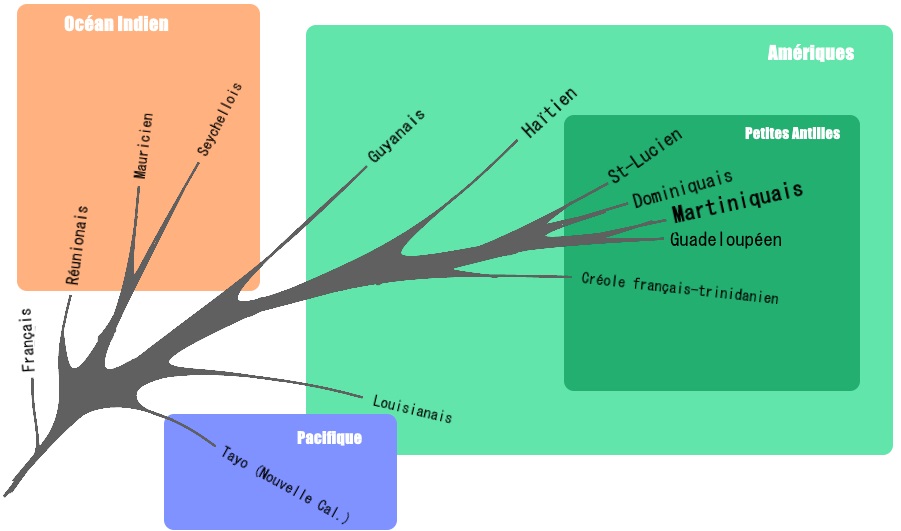
To view Creole languages solely as linguistic products of colonial encounter is to tell only part of their story. Creole is also creation. It’s evidence of people making meaning under conditions they did not choose. Across the Caribbean, languages emerged from encounters between African languages, European colonial languages and other linguistic and cultural traditions. These histories are inseparable from slavery, displacement and colonialism, but the languages that emerged from them cannot be reduced to those histories.
They became living languages.
They became ways of telling stories, expressing affection, arguing, remembering, joking and imagining.
And, eventually, they became literary languages.
That distinction matters.
Because when we talk about the Francophonie, we can sometimes imagine French as the centre and everything else as existing in relation to it: French and its “variants”, French and its “dialects”, French literature and literature written elsewhere in French.
But what happens when we reverse the perspective?
What happens when French is not the destination, but one element in a much larger linguistic landscape?
The word Francophonie carries complicated histories.
On one level, it describes a vast community of French-speaking people and countries connected by language. On another, it inevitably raises questions about the relationship between language and power. French became a global language through histories of empire, administration and education. Because of this, for many writers outside metropolitan France, writing in French can involve negotiating a language that is intimate while also being historically imposed.
This does not mean that French belongs exclusively to France.
It’s actually the opposite.
One of the most fascinating things about postcolonial Francophone literature is the extent to which writers have taken French elsewhere.
They have bent it.
Expanded it.
Interrupted it.
Made it carry sounds, rhythms and cultural references that metropolitan French could never fully contain or understand.
The result is not necessarily a rejection of French. Instead, it is an insistence that French does not have to remain unchanged in order to be legitimate.
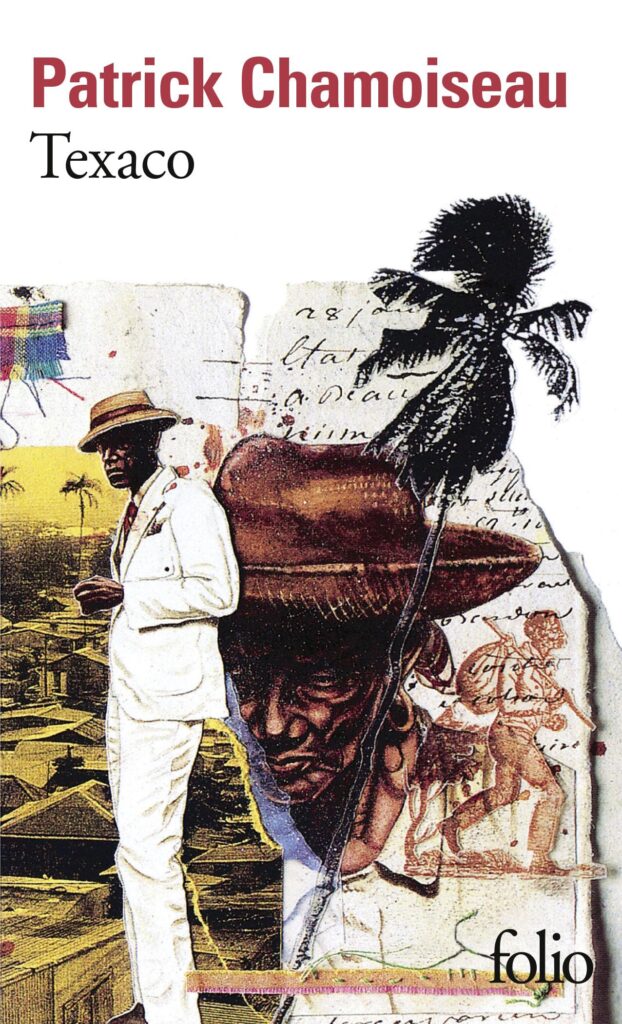
Patrick Chamoiseau’s writing offers one of the clearest examples of this linguistic transformation.
His 1992 novel Texaco, which won the Prix Goncourt, is deeply rooted in Martinican history and culture. Its language reflects the relationship between French and Martinican Creole, while incorporating oral storytelling, rhythms and linguistic inventions. Scholars have noted that Chamoiseau’s literary French is not simply “standard” French with occasional Creole vocabulary added to it; rather, his writing creates an interstitial space between languages.
Sometimes the most interesting writing happens in the space between categories.
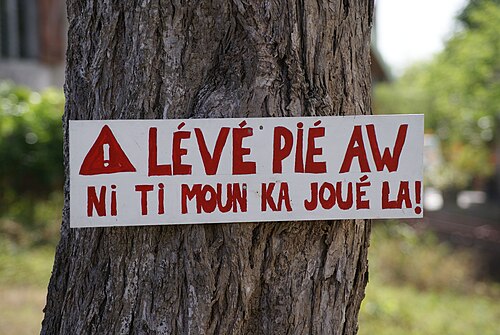
There is a persistent hierarchy in the way languages are discussed.
A language associated with a former colonial power is often treated as sophisticated, literary and standard.
A Creole language, by contrast, can be dismissed as informal, hybrid or somehow incomplete…as though it exists in the shadow of the language from which it partially developed.
But this understanding is profoundly inadequate.
Creole languages are not failed versions of European languages.
They have their own linguistic histories, structures and expressive possibilities.
More importantly, they carry cultural memories.
This is one reason why the concept of Créolité became so significant in Martinican literary thought.
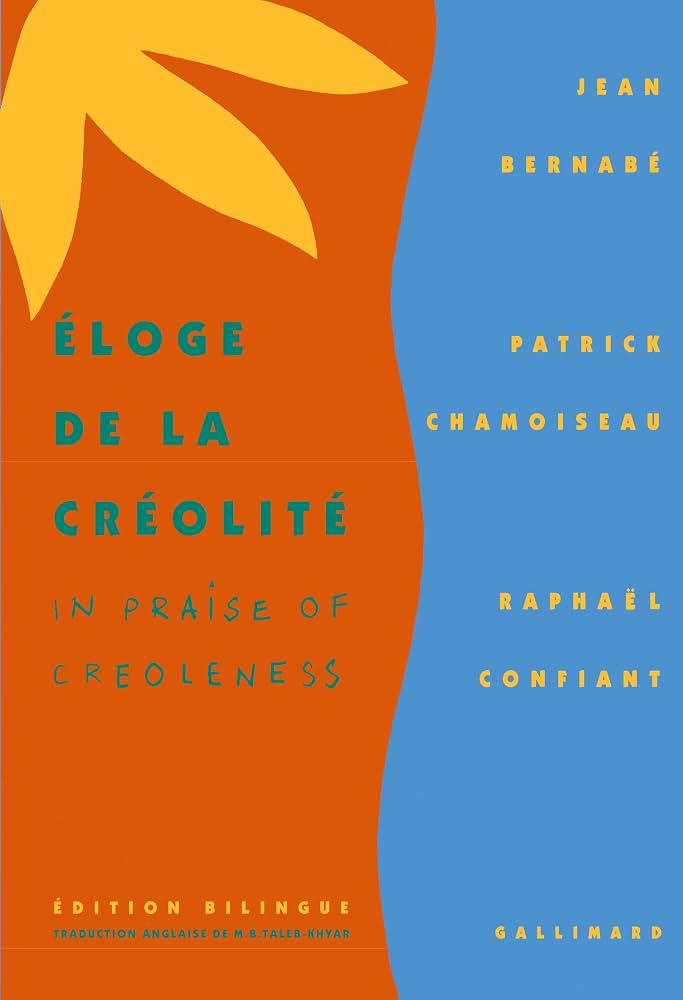
In 1989, Jean Bernabé, Patrick Chamoiseau and Raphaël Confiant published Éloge de la Créolité (In Praise of Creoleness), a manifesto that looked to articulate a distinctly Caribbean literary and cultural consciousness. The movement placed particular emphasis on orality, memory, lived experience and the creative possibilities of language.
The manifesto’s understanding of Créolité is deliberately expansive. It does not mean “speaking Creole”.
It is a way of understanding identity itself as historically layered and continually produced.
The Caribbean, in this framework, cannot be reduced to a single origin.
Its cultures emerged through encounters between African, European, Asian and other traditions under the violent conditions of colonial history. Yet what emerged from those encounters was not simply a collection of separate cultures sitting beside one another. Something new was created.
That newness is precisely what makes Créolité so powerful as a literary concept.
Literature has always had a complicated relationship with linguistic rules.
Writers break sentences.
Invent words.
Change punctuation.
Write in dialect.
Move between registers.
Make a language strange.
Why?
Because sometimes the language available to us does not quite fit the experience we are trying to describe.
For writers shaped by multilingual or postcolonial realities, this problem can become even more pronounced.
What happens when the language of formal education is not the language of childhood intimacy?
What happens when the language of the archive is not the language of the grandmother?
What happens when the language used to describe you is not the language you use to describe yourself?
Perhaps the answer is not to choose.
Perhaps the answer is to create.
Chamoiseau’s work demonstrates this possibility particularly well. His prose in Texaco includes elements of oral language and Creole within French, producing a literary voice that reflects the linguistic complexity of Martinican society.
The point is not simply to make French more colourful.
It is to challenge the assumption that there is only one legitimate way for French to sound.
As a result, language becomes an aesthetic and political act.
There is something liberating about thinking of language as an encounter rather than a possession.
I grew up thinking about languages as distinct things.
French was French.
Lingala was Lingala.
English was English.
Each of them had its own vocabulary, grammar and cultural associations. Each belonged somewhere.
But lived experience is rarely so tidy.
Languages bleed into one another.
A word can carry a memory that its translation cannot.
A sentence can feel emotionally different depending on which language holds it.
Sometimes the language that best describes an experience is not the language in which you first learned to write.
And sometimes you need more than one.
This is one of the reasons Creole literature speaks so powerfully to broader questions of diaspora.
The Creole experience is not identical to every diasporic experience, and it would be careless to collapse distinct histories into one another. But the literary possibilities of Créolité offer a useful way of thinking about what happens when identity refuses neat linguistic borders.
You can be rooted without being singular.
You can inherit several histories without reducing them to one.
You can belong to a language without allowing that language to define the limits of your imagination.
To write beyond the Francophonie, then, does not necessarily mean abandoning French.
It might mean refusing to let French be the only framework through which Francophone experience is understood.
It might mean asking what happens when French encounters Creole, African languages, Caribbean oral traditions, migration and memory.
It might mean recognising that the Francophone world has never been linguistically uniform.
And perhaps most importantly, it might mean understanding that writers do not merely inherit languages.
They transform them.
The Éloge de la Créolité identifies several foundations for Creole literary expression, including a rooting in orality, the recovery of memory, attention to lived existence and the choice of one’s own speech.
That final idea stays with me:
The choice of one’s own speech.
There is power in that.
Because language is not simply something that happens to us.
It can also be something we make.
This is where the conversation becomes personal for me as a writer.
I write from a multilingual inheritance.
French was my first language. Lingala followed. English became another part of my linguistic world.
I do not experience these languages as interchangeable. They carry different histories, sounds and emotional textures. They have different relationships to family, education, culture and public life.
But I also don’t want my writing to treat them as walls.
I am increasingly interested in what happens in the spaces between them.
What happens when a French-speaking African diaspora writer writes in English?
What happens when French remains present beneath the English?
What happens when a Lingala word carries something that English cannot quite reproduce?
What happens when cultural memory survives not through perfect translation, but through rhythm, reference, gesture and implication?
These questions are becoming part of how I understand my own writing.
And perhaps this is what writing beyond the Francophonie ultimately asks us to consider.
Not: Which language are you?
But:
What can you create with the languages you have?
The history of Creole languages contains violence. We cannot romanticise the colonial conditions from which they emerged.
But we shouldn’t allow violence to be the only story that we tell about what resulted from it.
Creole languages are also testimonies to human creativity.
People who were displaced created ways of speaking.
People whose histories were fragmented created ways of remembering.
People whose voices were subordinated created literary traditions capable of speaking back.
That is why Creole, for me, is more than a linguistic category.
It is a creative possibility.
It reminds us that languages are not museums. They are living things.
They move.
They borrow.
They resist.
They absorb.
They invent.
And writers do the same.
Perhaps writing beyond the Francophonie means embracing that movement: refusing the idea that language must remain pure, singular or obedient.
Perhaps it means allowing French to meet the languages and histories it has encountered—and allowing the resulting literature to become something neither entirely French nor entirely outside of French.
Something new.
Something lived.
Something created.
Because sometimes the most powerful way to inherit a language is not to preserve it exactly as we received it.
It is to make it ours.