The Bibi Edit
Stories, Style & Substance
Stories, Style & Substance
Stories, Style & Substance

Home is not always a place we can return to. Sometimes, it is a language that remembers us.
What does it mean to write about home when home itself is complicated?
For some people, home is a geographical certainty: a house, a street, a neighbourhood, a country whose landscapes can be summoned almost instinctively. For others, especially those shaped by migration, colonialism and diaspora, home can be more of an abstract concept.
It can exist in fragments, such as a grandmother’s voice or a childhood expression.
A word that refuses to translate neatly into another language.
A particular rhythm of speech.
Home can be something we remember before we can fully explain it.
This is one of the questions that makes the writing of Martinican author Patrick Chamoiseau so compelling to me.
In his work, language is never just a tool for describing a place. It is part of the place itself. Memory lives inside speech, and speech becomes a way of carrying history.
Chamoiseau’s writing asks us to consider what happens when the language of home does not exactly match the language of the page.
And perhaps even more importantly: what happens when writing becomes an attempt to remember what history has tried to erase?
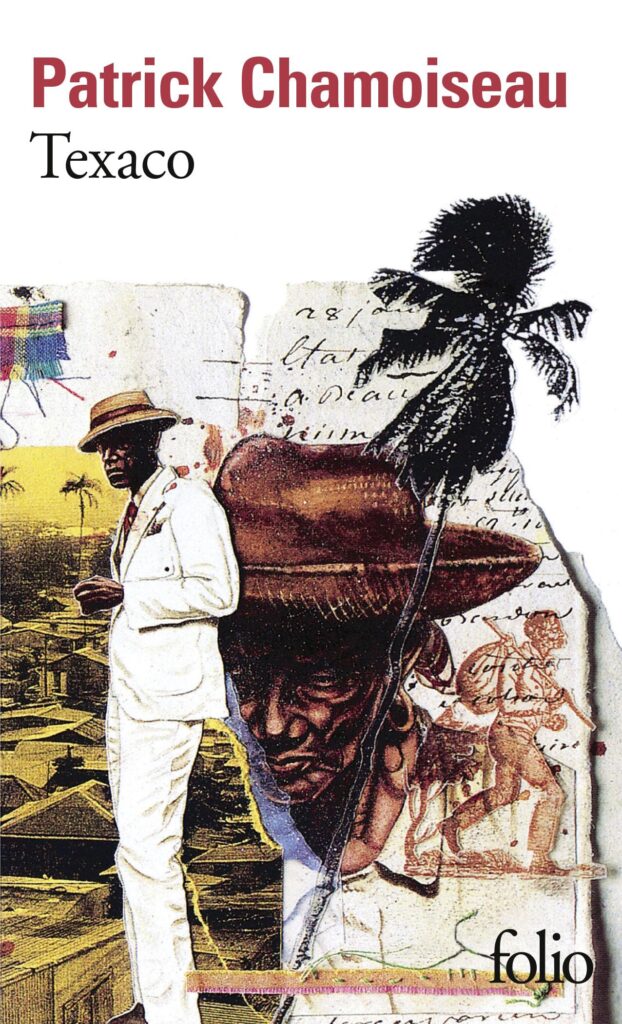
Chamoiseau’s Texaco, published in 1992 and awarded the Prix Goncourt that same year, is set in Martinique and tells the story of a community living on the outskirts of Fort-de-France. The protagonist’s, Marie-Sophie Laborieux, life story becomes intertwined with the history of the settlement of Texaco and with Martinique’s broader history.
But Texaco is not just a historical novel.
It is a novel deeply concerned with how history is remembered.
Marie-Sophie’s story emerges through storytelling, recollection and layers of voices. Personal memory and collective history overlap until it becomes difficult to separate them completely.
This feels particularly significant in a colonial context.
Official histories tend to prefer documents, with dates, names, archives and institutions.
But communities also remember differently.
Communities remember through stories.
Through songs.
Through family names.
Through places.
Through the phrases people use to describe what happened before they were born.
Chamoiseau gives literary space to these forms of memory and the result of this is a novel that doesn’t just sit behind the characters.
The result is a novel in which history does not simply sit behind the characters.
History speaks through them.


One of the most distinctive elements of Chamoiseau’s work is his engagement with the tradition of the contour, also known as the storyteller.
In Martinican and wider Caribbean oral traditions, storytelling isn’t just entertainment. It can be a means of transmitting knowledge, preserving memory and creating community.
The storyteller carries what would otherwise disappear.
This particularly matters in a society whose history has been shaped by slavery and colonialism.
When the official archive is incomplete, selective or written primarily from the perspective of those who held institutional power, oral memory can become another kind of archive.
Not a perfect one.
Not an objective one.
But a living one.
The storyteller doesn’t necessarily give us a single authoritative version of the past.
They give us voices.
And voices can contradict one another.
They can exaggerate.
They can forget.
They can transform.
They can remember something emotionally even when the precise details have disappeared.
That does not make memory useless.
It makes memory human.


Chamoiseau’s relationship with French and Martinican Creole makes this question of memory even more interesting.
Martinican Creole developed within the specific historical and linguistic conditions of the Caribbean, shaped by encounters between European colonial languages, African languages and other linguistic influences.
For Chamoiseau, Creole isn’t simply a vocabulary from which to borrow occasional words.
It represents a way of seeing and experiencing the world.
His writing therefore frequently unsettles the boundaries between French and Creole, between written language and spoken language, and between literary prose and oral storytelling.
The effect can be disorientating for readers who are used to standardised French, but maybe that disorientation is precisely the point.
It also begs the question of why literature always make itself completely comfortable for the reader?
Why shouldn’t the reader have to move towards the language rather than expecting the language to move towards them?
Chamoiseau’s prose can make French feel unfamiliar.
And in doing so, it makes visible the fact that what we call “French” is not a single, static linguistic experience.
There are Frenches.
There are voices within French.
There are histories pressing against its boundaries.
There is something fascinating about the transformation that happens when an oral tradition enters literature.
Speech now has movement.
It has rhythm.
It pauses.
Repeats.
Responds to the person listening.
On the other hand, writing is often treated as fixed.
The words are placed on the page and remain there.
Chamoiseau brings these worlds into conversation.
His writing carries traces of oral storytelling into the written form, creating prose that feels like it is being spoken as much as read.
That matters because oral storytelling is fundamentally relational.
Someone tells.
Someone listens.
The story moves between people.
Memory therefore becomes something active.
It is not simply stored.
It is transmitted.
Every retelling can alter it slightly.
Every generation can add something.
Every listener can carry it somewhere new.
Memory is in motion.
And maybe that is why Chamoiseau’s understanding of home feels so powerful.
Home is not simply the place where the story began.
Home is the story continuing to move.
Texaco is deeply concerned with place.
The settlement itself is not just a backdrop. Its existence is tied to questions of survival, belonging, urban development and the right to occupy space.
This makes the title Texaco significant.
A place can become a repository of memory.
Streets remember.
Buildings remember.
Neighbourhoods remember.
Even when physical landscapes change, the stories attached to them can persist.
This is particularly important for diasporic communities.
When people move, they often take places with them.
A recipe can become geography.
A language can become geography.
A song can become geography.
A name can become geography.
You can be thousands of miles away from the place your family calls home and still recognise it in the sound of a particular word.
This is why I have become increasingly interested in the idea that home is not necessarily a fixed location.
Sometimes home is something we carry.
There is a particular vulnerability that comes with migration.
You leave one place and enter another.
The new place becomes familiar, but the old place does not necessarily disappear.
Instead, it becomes layered with memory.
This can create a strange relationship with language.
A language may belong to the past and the present simultaneously.
You might know a word because your parents used it.
You might use another because school taught you to.
You may write in a third because that is the language in which your literary voice has developed.
None of these necessarily cancels the others.
They accumulate.
For me, this is one of the most interesting ways of approaching Chamoiseau.
His work makes me think about language not as a series of boxes but as a series of paths.
Some paths overlap.
Some disappear.
Some lead somewhere unexpected.
And some take you back home.
There are words that cannot be translated without losing something.
Not because translation is impossible, but because meaning is rarely contained entirely within a dictionary definition.
A word can contain a relationship.
A cultural reference.
A childhood.
A voice.
A particular way of seeing.
This is why multilingual writing can feel so emotionally precise.
Sometimes the writer knows that one language will not do everything.
So another enters.
Maybe only for a word.
Maybe for a phrase.
Maybe through rhythm rather than vocabulary.
The language becomes layered.
And the reader is invited to inhabit that layering.
Chamoiseau’s work demonstrates the literary possibilities of this kind of linguistic movement.
His writing does not simply document Martinican linguistic reality.
It transforms that reality into literary form.
The result is prose in which language itself becomes part of the story.
There is another reason I keep returning to the idea of memory in Chamoiseau’s work.
It resists the temptation to imagine home as something pure.
Home is often romanticised in literature.
We imagine the homeland as the place where everything makes sense.
But for diasporic and postcolonial writers, home can also contain rupture.
Violence.
Colonial history.
Loss.
Contradiction.
It can be a place you love without idealising it.
It can be a place you inherit without having personally lived there.
It can be somewhere you feel connected to and estranged from at the same time.
Chamoiseau’s writing allows these contradictions to exist.
Home does not have to be perfect to be meaningful.
And memory does not have to be complete to be real.
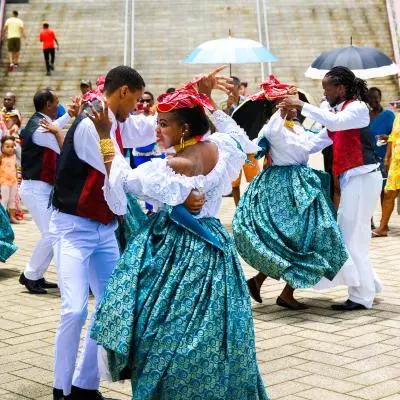
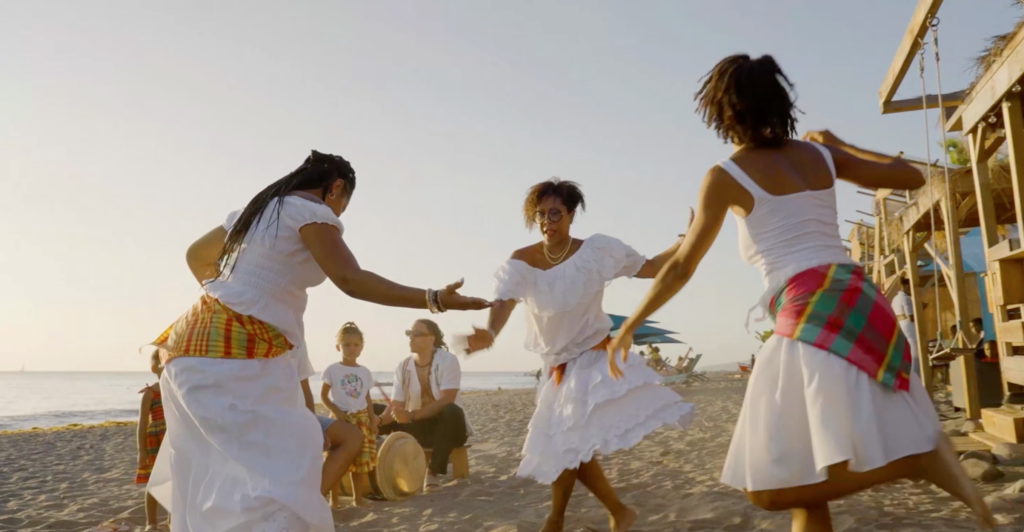
Maybe the deepest question raised by Chamoiseau’s work is not simply Where is home?
Maybe it is:
What survives?
What survives when people are displaced?
What survives when languages are suppressed?
What survives when histories are written by people other than those who experienced them?
What survives when generations grow up somewhere else?
Sometimes, it is a story.
Sometimes, it is a language.
Sometimes, it is a way of speaking that sounds ordinary until you realise how much history it carries.
This is what makes literature so important.
A novel can become another kind of archive.
Not because fiction replaces history, but because it can preserve forms of memory that official records cannot fully capture.
The emotional history.
The intimate history.
The history of ordinary people.
The history of what it felt like to live through something.
As a writer, I find myself drawn to this idea of memory as something mobile.
I am interested in what happens when home exists across languages, countries and generations.
What happens when the places we belong to are not all in the same country?
What happens when our relationship with home is inherited through people?
What happens when a language becomes one of the few remaining physical traces of somewhere else?
Perhaps writing becomes a way of gathering those fragments.
Not necessarily to reconstruct an untouched version of the past.
That version may never have existed.
Instead, writing can allow us to acknowledge the fragments for what they are.
A word.
A voice.
A memory.
A story.
A place.
A name.
Together, they form something.
Not necessarily a map.
Maybe a home.
Patrick Chamoiseau reminds us that language does more than describe where we come from.
Sometimes, language is where we come from.
It can carry histories that predate us and memories we never personally experienced.
It can connect the living to those who came before.
It can make a distant place feel close.
And through literature, those memories can move again.
From voice to page.
From one generation to another.
From one country to another.
From one language to another.
That’s why I think of memory not as something static, locked inside the past, but as something that travels.
It changes as we carry it.
We translate it.
We retell it.
We write it.
We sometimes lose parts of it.
And then, unexpectedly, we find them again in a word.
Maybe home has always been like that.
Not a place waiting patiently for us to return, untouched by time.
But something moving alongside us.
Something we continue to create.
Something we continue to remember.
Something that, despite everything, remembers us too.